Mastering Your Resume (Rizyum) for the 2026 North American Job Market
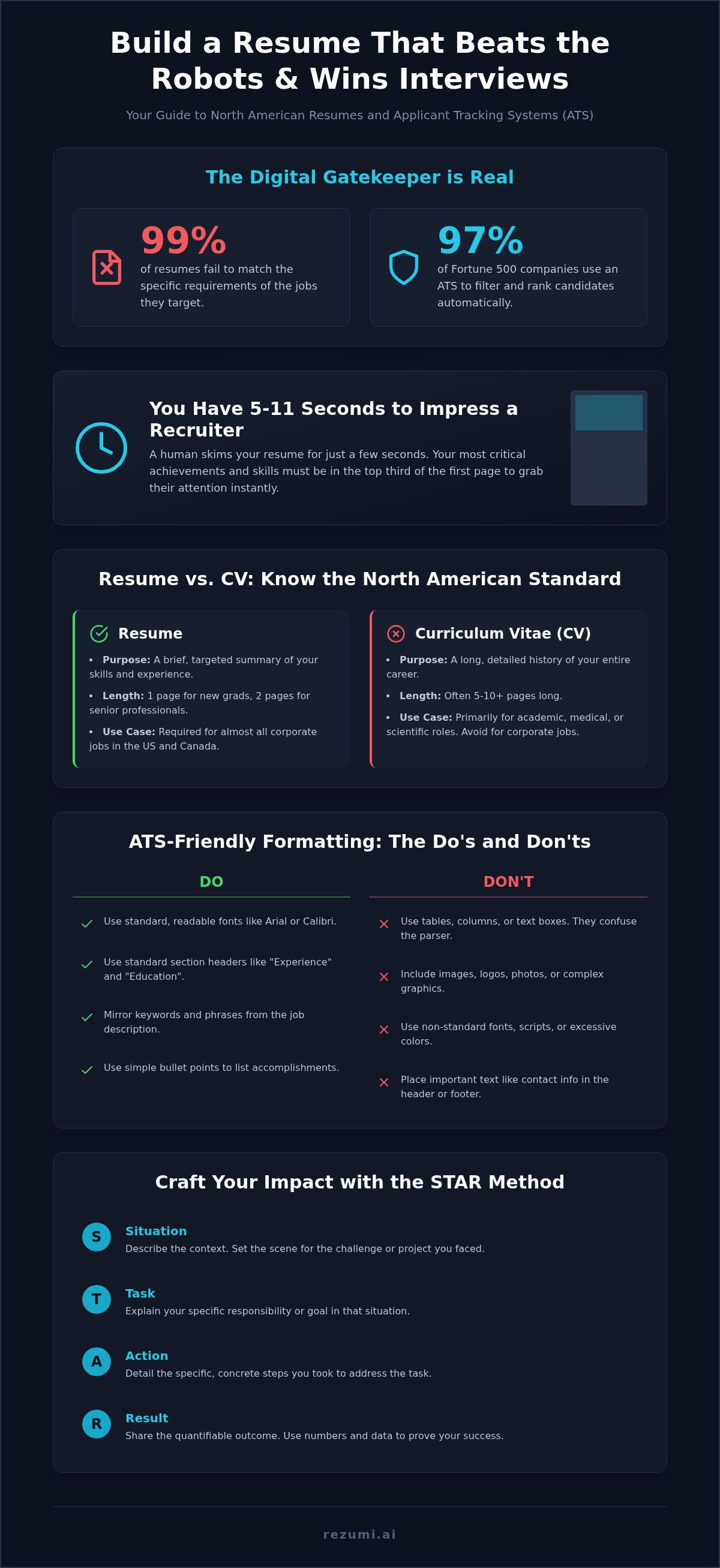
Ninety-nine percent of resumes fail to match the specific requirements of the jobs they target. In 2026, over 97 percent of Fortune 500 companies use automated systems to rank your application before a human ever sees it. If your rizyum lacks the right data points, you stay at the bottom of the pile. This isn't just about a typo or a bad font. It's about how machines read your professional history.
You likely feel the frustration of sending out dozens of applications only to hear nothing back. It's exhausting to see your global experience ignored by local recruiters. We're going to change that. You will learn how to build a resume that clears every digital hurdle. You will learn how to secure more interviews. We'll show you how to optimize your documents for the US and Canadian markets with precision.
This guide breaks down the exact formatting rules you need for the current year. We'll cover how to close experience gaps and translate your skills for local recruiters. You'll get a clear strategy to turn your application into an interview invitation. It's time to stop guessing and start using a data-backed approach to your career.
Key Takeaways
- Learn why US and Canadian recruiters expect specific layouts and headers for your rizyum to be considered.
- See how Applicant Tracking Systems (ATS) parse your data so you can rank at the top of the candidate list.
- Choose clean designs over complex visual templates to ensure machines can scan your information correctly.
- Apply the STAR technique to your work history to show recruiters the exact value you bring to a team.
- Use AI-powered tools to get instant feedback on your resume score and prepare for the interview stage.
Understanding the North American Resume Standard
A North American resume is not just a list of your jobs. It is a strategic marketing document. Its job is to sell your skills to a specific employer. Many people search for a rizyum template online, but they often miss the core goal. You aren't just documenting your history. You are pitching yourself as the solution to a company's problem. Recruiters in the US and Canada expect a very specific layout. They want to see your contact info, a summary, your skills, and then your work history in reverse chronological order. If you are a global professional, you must adapt your experience to these local expectations. This means translating job titles that might not exist in North America into terms that local managers recognize.
Human eyes will only spend about 5 to 11 seconds on your document during the first scan. This means your most important information must be in the top third of the page. If a recruiter cannot see your value immediately, they will move to the next candidate. This is why understanding the purpose of a resume is vital for your job search. It's about speed and clarity. You have a small window. Make it count. If your layout is messy, you lose that chance instantly.
The Difference Between a CV and a Resume
CVs and resumes are not the same. In North America, the difference is critical. A CV (Curriculum Vitae) is a long, detailed record of your academic or medical career. It can be ten pages long. A resume is a brief summary of your work experience. Most corporate roles in the US and Canada require a two-page resume (a standard for senior professionals). New graduates should stick to one page. If you send a five-page document to a tech company, it will likely be ignored. Keep it focused on the job you want today rather than everything you have ever done.
Why Spelling and Formatting Matter More Than Ever
Your rizyum must be perfect. Errors signal a lack of care. Don't let a typo cost you a job. Use standard fonts like Arial or Calibri. These fonts are easy for Applicant Tracking Systems (ATS) to read. Consistent formatting helps everyone. It helps the machine find your job titles. It helps the recruiter find your dates of employment. Use bold text for headers and bullet points for your duties. This creates a clean hierarchy that guides the reader's eye exactly where you want it to go. Avoid using images or complex graphics. They confuse machine scanners. Stick to a clean, text-based strategy for the best results.
How Applicant Tracking Systems Read Your Application
Most large employers use technology to manage the flood of applications they receive. In 2026, 97.4% of Fortune 500 companies use an Applicant Tracking System (ATS) to filter candidates. These systems don't just store your file. They parse your document to find specific keywords and skills. If your resume score is too low, a human recruiter will likely never see your application. Modern AI tools can screen 100 resumes in about 10 minutes. This speed means your rizyum must be perfectly optimized from the start to stay in the "yes" pile. Optimization is not optional; it's the only way to ensure your file reaches a human desk.
The software acts as a digital gatekeeper. It looks for data points that match the employer's needs. If the system cannot read your text, it assumes you are not qualified. This happens even if you have years of perfect experience. You are competing against hundreds of other applicants. The goal is to rank in the top five percent of the system's results. Major platforms like Workday now hold over 40% of the market share. These systems are highly efficient and leave no room for formatting errors. You must build a document that speaks both to the algorithm and the person who eventually reads it.
The Role of Keywords in ATS Optimization
Keywords are the bridge between your experience and the job description. You must match the specific language used by the employer exactly. For example, if the post asks for "Project Management," don't just write "led teams." Use a mix of hard skills, like software proficiency, and soft skills, like leadership. In 2026, algorithms are smarter. Natural phrasing is better than keyword stuffing. You can use ATS optimization tools to see how well your skills align with the role before you hit submit. This ensures your profile matches the 79% of organizations that now use AI directly in their hiring systems.
Common ATS Roadblocks to Avoid
Many candidates use visual templates from design sites, but these often fail machine scans. To understand how applicant tracking systems read resumes, you need to think like a computer. Avoid using tables, columns, or graphics. These elements confuse the scanner and can garble your text. Stick to standard section headers like "Experience" and "Education." This helps the system know where to look for your history. Always upload your file as a PDF unless the job post specifically asks for a Word document. This ensures your formatting stays exactly as you intended for the scanner reading your rizyum.
Comparing Visual Templates and ATS Friendly Designs
You might think a colorful, multi-column template makes you stand out. To a human recruiter, it might look impressive. To an Applicant Tracking System, it is often a mess of unreadable data. Most visual templates prioritize style over structure. This choice is a high-stakes mistake. Your rizyum must be readable by a machine first. If the scanner cannot extract your data, you stay invisible. You don't need a graphic designer to win. You need a document that respects the technical rules of the modern hiring market. Professionalism in 2026 is about technical compatibility.
The best design is invisible. It uses a clean hierarchy to guide both the software and the human reader. Professional looks come from consistent margins, standard fonts, and clear headings. It isn't about being boring. It's about being functional. A well-engineered document balances visual appeal with high technical scores. When your document is easy to read, it builds trust with the recruiter. It shows you understand the standards of the North American market. Stop prioritizing aesthetics over performance and focus on a layout that works.
Why Canva Style Resumes Often Fail
Many popular design platforms use graphic elements that block data extraction. Text hidden inside shapes, icons, or images is often invisible to an ATS. Multi-column layouts are another major risk. Scanners often read across the whole page from left to right. This can mix text from the left column with the right column, garbling your work history. Focus on your content first. When you build your rizyum, use simple bolding or horizontal lines for style. Don't let a "pretty" template hide your qualifications from the software that decides your career path.
The Anatomy of an ATS Optimized Resume
A successful document follows a predictable blueprint. Put your contact information at the very top in a simple, text-based header. Don't hide your phone number or email in a footer or a sidebar. Avoid putting your LinkedIn URL inside a graphic icon because scanners might miss the link. Replace outdated objective statements with a sharp professional summary. This summary should highlight your biggest wins in three clear sentences. It tells the employer exactly what you bring to the table from day one.
Your work history must follow a reverse chronological order. Start with your current role and move backward through your career. This is the gold standard in the US and Canada. It places your most relevant, recent achievements right where the recruiter looks first. This structure ensures that your career progression is clear and logical. Use standard section titles like Work Experience and Education so the software knows exactly where to find your data.
Building an Optimized Profile from Scratch
You can't build a winning rizyum without reading the job post first. It is your blueprint. Treat every requirement as a mandatory checklist. If the employer asks for specific software or leadership skills, those exact words must appear in your profile. You are building a document for a specific person and a specific machine. Start by highlighting the primary requirements in the job description so you know exactly what to address.
Tailoring is the most important step in your application strategy. Don't send the same document to every company. You must change your professional summary for every single application. Highlight the specific wins that match that specific role. This shows the recruiter you are a perfect fit rather than a generic applicant. It takes more time, but it results in more interviews.
Using the STAR Technique for Impact
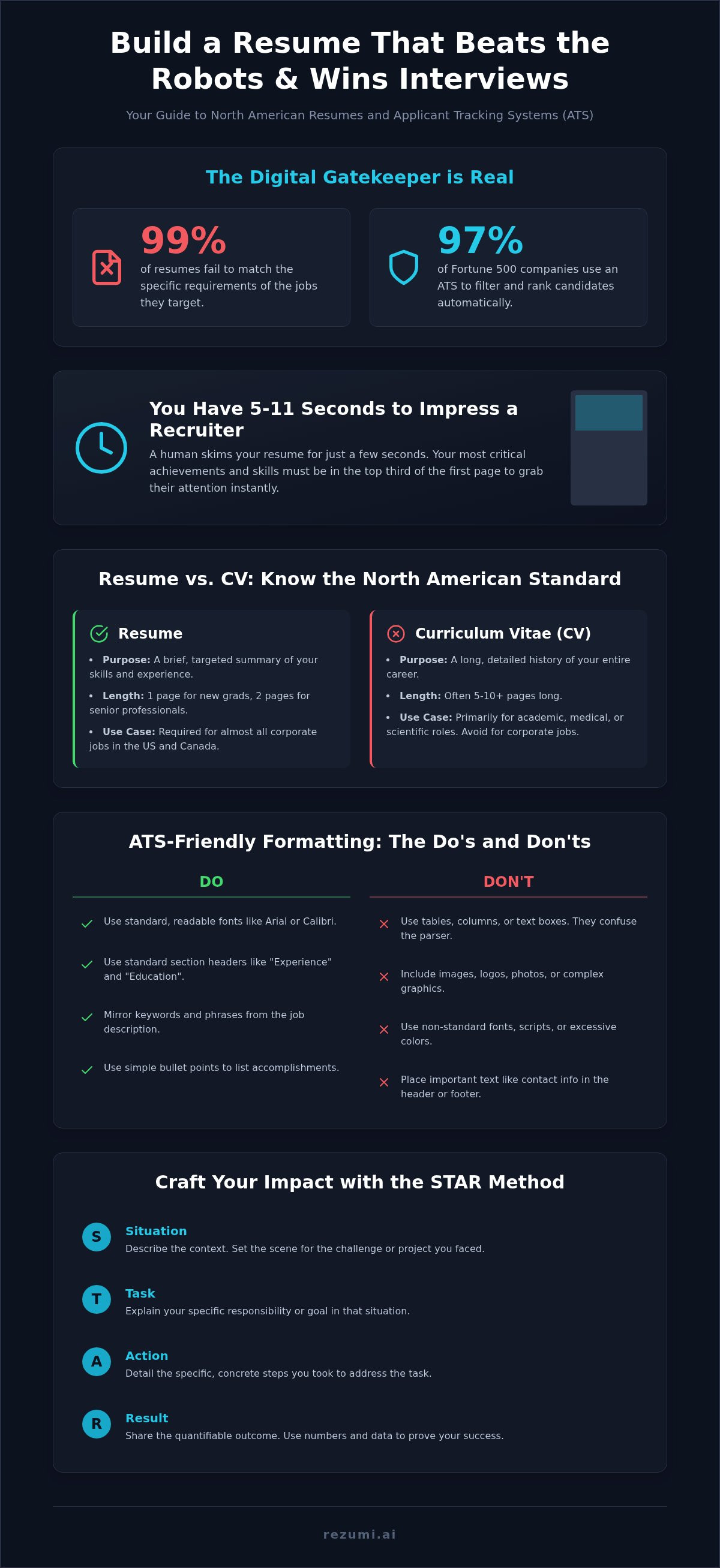
Use the STAR method to write your bullet points. This structure turns boring duties into powerful achievements. Instead of saying you "managed budgets," you provide a clear story of success. This technique is the gold standard for North American resumes. It helps you prove your value with evidence rather than just claims. Use this structure for your most recent roles:
- Situation: Set the scene for a specific challenge you faced in your role.
- Task: Define the goal you needed to achieve or the problem you had to solve.
- Action: Explain the exact steps you took to solve the problem.
- Result: Share the final outcome using data and metrics to prove your success.
Quantifying your work history is vital. Numbers provide proof of your skills. Use percentages, time frames, or currency to show your impact. For example, mention that you "reduced costs by 15 percent" or "managed a team of 10 people." This data helps you stand out in a market where 99 percent of resumes have experience gaps compared to the job post. Numbers are a universal language that every recruiter understands.
Checking Your Resume Score
You need to know how you rank before you hit the submit button. Use a tool to scan your rizyum against the job description. This scan identifies missing keywords and formatting errors that could trigger a rejection. Aim for a score above 80 percent to be competitive in the US and Canadian markets. If your score is low, adjust your skills section based on the missing keywords found in the scan.
A high score gives you the confidence that your document will clear the digital hurdles. It moves you from the bottom of the pile to the top of the candidate list. This is the final step in the optimization process. It ensures your profile is ready for the high stakes of the North American job market.
Mastering the Market with Rezumi AI Tools
You have the strategy. Now you need the execution. Rezumi provides the technical edge required for the 2026 job market. Our platform is built by professionals who understand the specific hurdles of the US and Canadian systems. You can manage your entire application journey in one centralized workspace. This eliminates the chaos of tracking multiple versions of your profile across different job boards. It is a data-driven partner for your career transition.
A great rizyum is only half of the equation. You also need a cover letter that speaks the same language as your optimized resume. Our AI Cover Letter Generator creates tailored documents that match your specific skills to the employer's needs. This consistency builds a stronger case for your candidacy. It ensures that every part of your application package works toward the same goal: getting you noticed by the hiring manager.
Real Time Resume Optimization
Stop wondering if your document will pass the scan. Upload your current file to our ATS Resume Optimization tool for instant feedback. You will receive an immediate score that tells you exactly where you stand. The system provides step by step suggestions to improve your keyword alignment and formatting. This is not generic advice. It is a precise roadmap to a higher ranking. Once you are satisfied, export a professional PDF that is engineered to be machine-readable and visually polished.
Preparing for the North American Interview
Securing the interview is a win, but closing the deal requires practice. Our AI Interview Prep tool acts as your personal career coach. It uses the job description to predict the most likely questions you will face. You can record your answers and receive immediate feedback on your tone, speed, and delivery. This practice builds the confidence you need to handle high-stakes conversations. It bridges the gap between a high-scoring rizyum and a signed job offer.
The North American market moves fast. Recruiters often make decisions in seconds. You cannot afford to be unprepared. By using a strategic workspace, you turn a difficult process into a controlled, repeatable system. Take control of your professional narrative today. You can view our pricing and tools to start your optimization process immediately. Success in 2026 belongs to those who use the right technology to prove their value.
Take Control of Your Career Path
Securing a job in the US or Canada requires more than just experience. It requires a document built for the specific mechanics of the 2026 market. You now have the knowledge to move from a generic history to a strategic profile. By using the STAR technique and focusing on clean, machine-readable layouts, you ensure your application reaches the right hands. This transition from uncertainty to control is the foundation of a successful job search.
Your rizyum is your most powerful tool in this competitive landscape. It isn't just about listing past duties; it's about proving you are the exact solution an employer needs. We've seen how small formatting changes and precise keyword alignment can change your results. You have the skills to succeed. Now you have the technical roadmap to prove it to every recruiter and automated system in North America.
Rezumi is trusted by global professionals who need to translate their success for new markets. Our AI tools are designed for total ATS compatibility and centralized tracking. You're ready to stop guessing and start securing interviews. Your next professional chapter starts with a document that works as hard as you do.
Frequently Asked Questions
What is the best resume format for the 2026 job market?
The reverse chronological format remains the gold standard for 2026. It places your most recent, relevant experience at the top where recruiters and ATS look first. This structure allows software to easily parse your career progression. Avoid functional formats that hide dates, as these often trigger red flags in automated systems. A clean, text-based layout ensures your data is extracted accurately every time you apply for a role.
How many pages should my resume be for a US job?
Most corporate roles in the US require a two-page resume for experienced professionals. New graduates and those with less than five years of experience should stick to a single page. If your document is longer than two pages, you risk losing the recruiter's interest during their 11-second scan. Focus on your most recent 10 to 15 years of work history to keep the content concise and highly impactful for managers.
Can I use AI to write my resume without getting caught?
You can use AI to optimize your document as long as the content remains truthful and tailored. Employers in 2026 value efficiency, but they reject generic, AI-generated fluff that lacks specific details. Use tools to align your skills with the job description rather than writing the entire document from scratch. This strategy ensures your profile remains authentic while meeting the technical requirements of modern systems. It's about refinement rather than total automation.
What is a good resume score to get an interview?
Aim for a score of 80 percent or higher to be competitive in the current job market. This score indicates that your document has strong keyword alignment and follows standard formatting rules. A score below 70 percent often means you've missed critical hard skills or used a layout that machines cannot read. Achieving a high score is the best way to move your file to a human recruiter for review.
Does the spelling rizyum affect my job search results?
The phonetic spelling rizyum is a common search term, but you must use the standard spelling "resume" in your actual file. Using non-standard spellings in your document will confuse ATS software and recruiters. While searching for tips using various terms is helpful, your final document must follow North American professional standards to be taken seriously by hiring managers and automated systems. Consistency ensures your data is parsed correctly.
How do I make my resume ATS friendly for Canada?
Making your document ATS friendly for Canada requires a clean hierarchy and standard section headers. Use terms like "Work Experience" and "Education" so the software knows where to find your data. Avoid using tables, columns, or images, as these elements often garble the text during the parsing process. Stick to a single-column layout and save your file as a PDF to preserve the formatting for the automated scanner.
Should I include a photo on my North American resume?
Never include a photo on a North American resume. Anti-discrimination laws in the US and Canada discourage employers from seeing your face before the interview. Including a photo can cause an ATS to reject your file automatically to protect the company from legal bias claims. Keep your document focused on your skills and achievements rather than your physical appearance. This ensures a fair evaluation of your candidacy based on your professional merit.
How often should I update my resume keywords?
You must update your keywords for every single job application you submit. Generic resumes rarely pass the 2026 ATS filters because each job description uses a unique set of requirements. Analyze the specific language in the job post and mirror it in your skills and experience sections. This level of tailoring proves that you're a perfect match for that specific role and its unique challenges. It takes time but yields better results.
Disclaimer
This article is provided for general informational purposes only and does not constitute professional, legal, financial, or career advice. While Rezumi strives for accuracy, we make no warranties as to the completeness or reliability of this content. Hiring practices, ATS behavior, and job-market conditions vary by employer, industry, and region — always verify against your specific situation. Any action you take based on this article is at your own risk.