25 Great Questions to Ask in an Interview to Stand Out in 2026
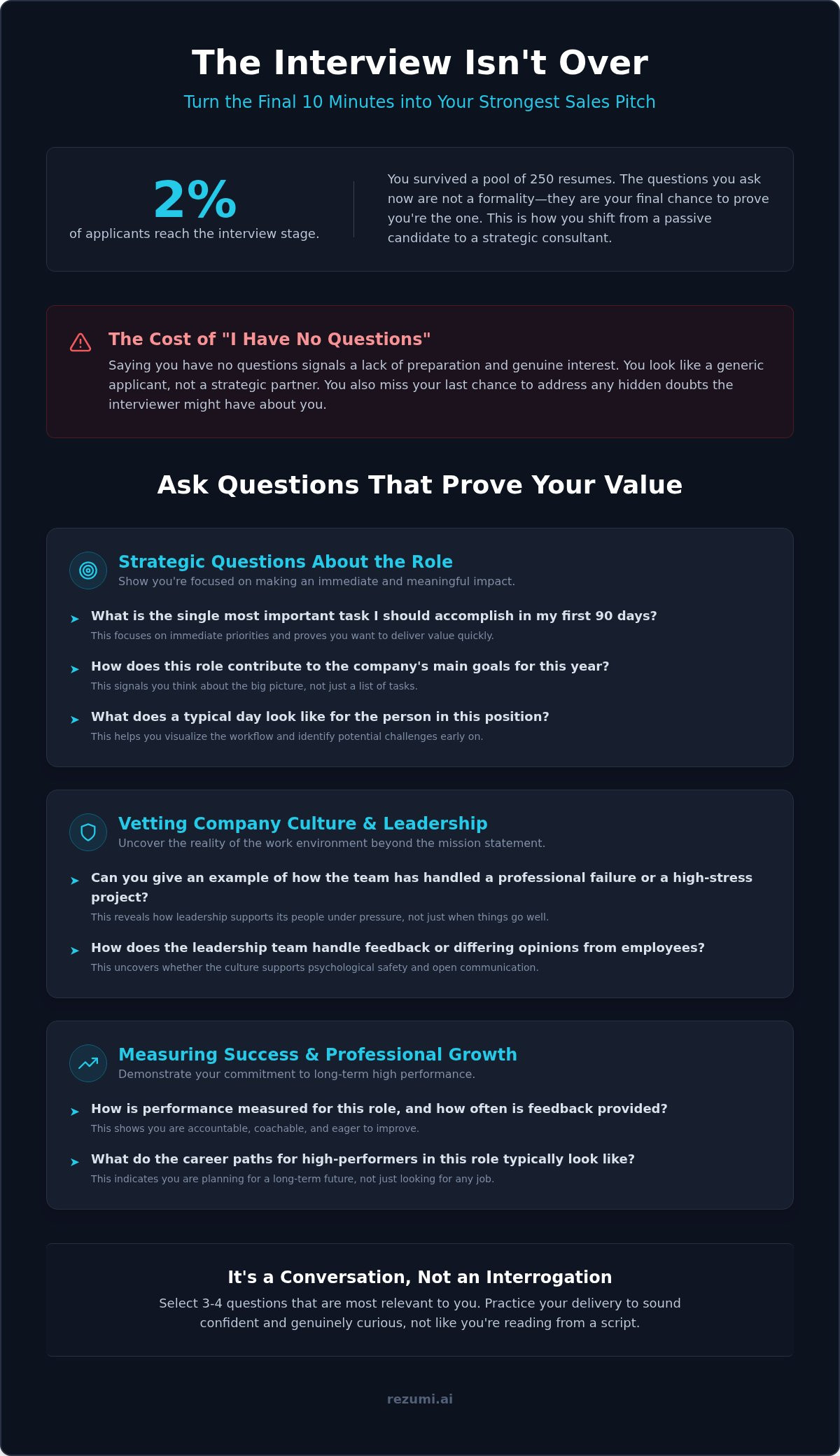
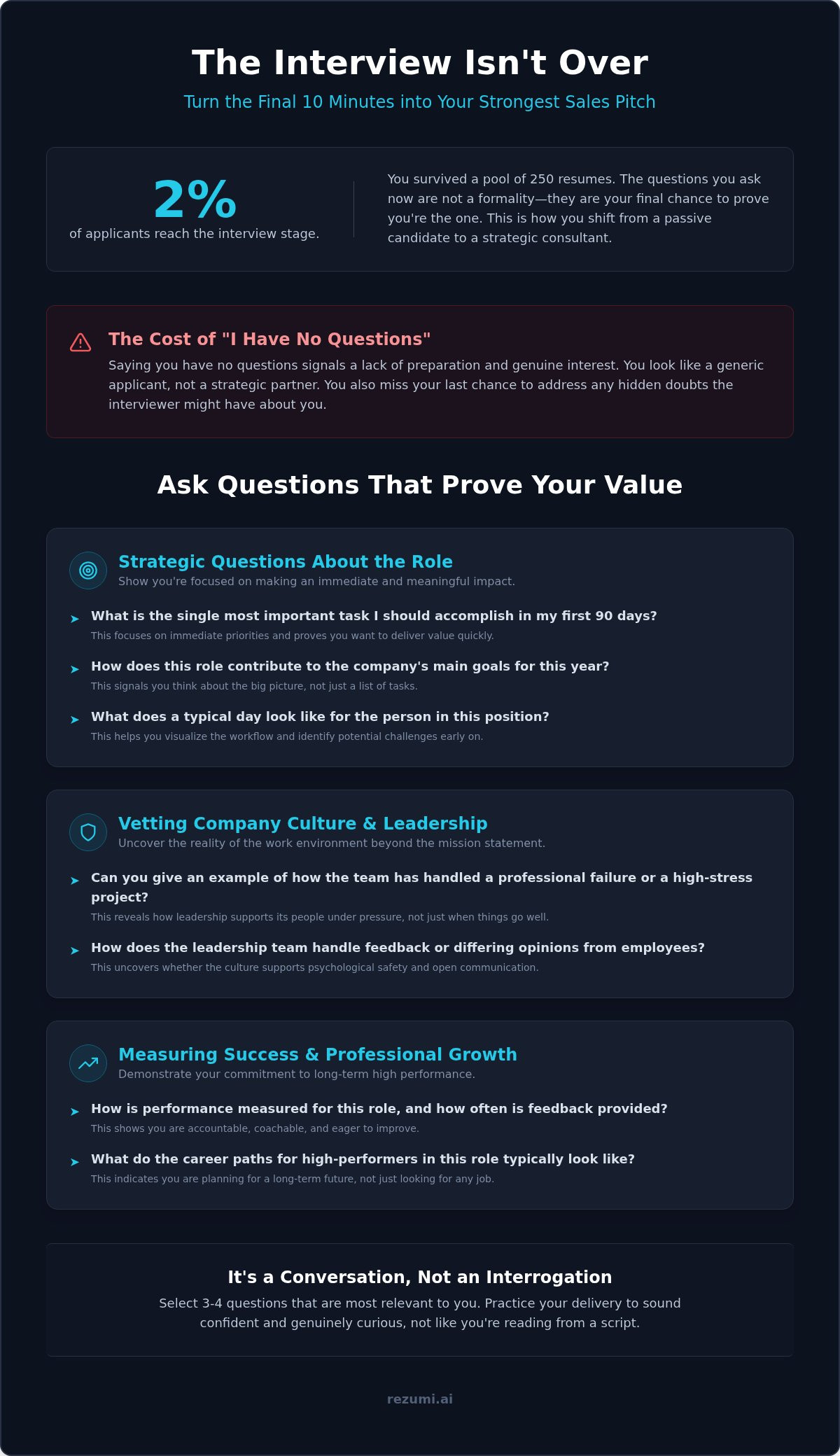
Only 2% of all applicants actually reach the interview stage. You survived a pool of 250 resumes to get into this room. Now, the final ten minutes will decide your future. Most candidates treat the end of the meeting as a formality. They ask about office snacks or dress codes. This is a mistake. The great questions to ask in an interview are actually your final sales pitch. They are the tools you use to prove you are a high-performance hire.
You feel the pressure to look prepared. You worry about missing a hidden red flag. It is normal to feel uncertain about what makes a question smart. We understand that moving from anxiety to control requires a data-backed strategy. This article provides the exact questions that prove your value and help you vet your next employer. You will stop guessing. You will start leading the conversation.
We have compiled a list of 25 vetted questions for the 2026 job market. You will learn the strategy behind each one and gain confidence for the final minutes of the meeting. We break down how to spot cultural flaws before you sign an offer. By the end, you will have a clear, structured plan to secure your next role.
Key Takeaways
- Stop viewing the Q&A as a formality and start using it to prove you are a strategic thinker who has researched the role.
- Identify the exact questions that reveal the immediate challenges you will face during your first 90 days on the job.
- Avoid generic culture questions by asking for specific examples of how leadership handles stress and professional failure.
- Master the great questions to ask in an interview that show you are committed to long term high performance and career growth.
- Practice your delivery with AI tools to ensure you sound natural and confident instead of just reading from a list.
Why Your Questions Matter as Much as Your Answers
The interview doesn't end when the recruiter stops talking. It's just beginning. Most candidates spend 40 minutes defending their past and zero minutes influencing their future. Asking great questions to ask in an interview signals that you're a strategic partner. You aren't just a worker looking for a paycheck. It proves you've done your homework. You aren't just reading the job description. You're analyzing the business model.
Strategic questions show high emotional intelligence. They demonstrate that you understand how your role fits into the larger company goals. This professional maturity sets you apart from the 250 other applicants who typically apply for a single corporate role. You're vetting them just as much as they're vetting you. If you don't ask questions, you're flying blind into a new contract. Use tools like Rezumi's AI Interview Prep to practice these high-stakes moments before you walk into the room.
Shifting the Power Dynamic
Interviews often feel like interrogations. You sit there. You defend your resume. You wait for the next question. This power imbalance hurts your performance. By asking targeted questions, you transform the meeting into a professional conversation. Recruiters actually prefer this. They want to see how you think when you're in control.
Curious candidates are often high-performance employees. They don't just follow orders. They solve problems before they start. A deeper understanding the job interview process reveals that the final minutes are your best chance to lead. You move from a passive participant to a strategic consultant. This shift builds trust and shows you're ready for the job.
The Consequences of Saying I Have No Questions
Silence is a signal. If you say you have no questions, you tell the recruiter you're a generic applicant. You suggest you have no interest in the company's future. It makes you look unprepared. You also miss a vital opportunity. This is your last chance to address any doubts the recruiter has about your fit.
If they think you lack a certain skill, a smart question can prove otherwise. Without questions, you leave your fate to chance. Recruiters manage 40% more open roles than they did in 2021. They don't have time to guess if you're interested. If you don't prepare great questions to ask in an interview, they assume you don't care. You become a risk instead of a solution.
Strategic Questions to Ask About the Role
You have already proven your skills on paper. Now you must prove you can execute them in their specific environment. The great questions to ask in an interview are those that bridge the gap between the job description and the daily reality. Employers in 2026 are focused on skills-based hiring. Nearly 70% of companies now prioritize competencies over credentials. Use your questions to show you have the exact skills they need to solve their current problems.
Asking about the role's immediate needs shows you are ready to hit the ground running. It moves the conversation from your past history to your future contributions. This is your chance to confirm if the workload and expectations align with your career goals. If the recruiter cannot define success for the role, that is a red flag you need to catch early. To ensure you are ready for these high-stakes answers, you can view our AI preparation tools to practice your delivery.
Questions for Clarity and Impact
High-performance candidates focus on results, not just tasks. You want to know how your work moves the needle for the entire organization. Ask for a clear definition of what success looks like in the short term. This demonstrates that you are goal-oriented and accountable. You can find several other smart questions to ask that focus on business impact and long-term value.
- What does a typical day look like for someone in this position? This helps you visualize the flow of work and identifies potential bottlenecks.
- What is the single most important task I should finish in my first 90 days? This shows you are focused on making an immediate impact.
- How does this role contribute to the company's overall goals this year? This signals that you understand the big picture and want to align your efforts with the company's mission.
Questions About Team and Tools
Success is rarely a solo effort. You need to know who you are working with and what tools you will use to get the job done. In 2026, technical stacks are more complex than ever. Asking about software shows you are tech-savvy and prepared. For more advice on mastering the North American hiring scene, read our guide on Strategic Interview Tips to Command the North American Job Market in 2026.
- Can you tell me about the team I will be working with daily? Understand the hierarchy and how different departments interact.
- What tools or software does the team use to manage projects? This confirms if you need to learn new systems like Jira, Asana, or proprietary AI platforms.
These questions do more than gather information. They signal that you are a professional who values efficiency and collaboration. You aren't just looking for any job. You are looking for the right fit where your specific tools and team-player mindset can shine. This level of detail is what separates a finalist from a generic applicant.
Vetting Company Culture and Leadership
Generic questions get generic answers. If you ask "What is the culture like?", the recruiter will give you a rehearsed speech about values and snacks. This tells you nothing about the daily reality of the office. You need great questions to ask in an interview that force the interviewer to provide specific examples. 76% of job seekers consider a diverse and healthy workforce an important factor when evaluating job offers. You cannot verify that health with surface-level questions.
Alignment is a two-way street. You aren't just looking for a job. You are looking for a manager who supports your growth and a team that handles stress without collapsing. In 2026, recruiters manage 40% more open roles than they did five years ago. They are busy. They will respect a candidate who saves them time by getting straight to the heart of how the company actually functions. This directness signals professional maturity and high emotional intelligence.
Digging Beneath the Surface
Every company claims to be a "family" when things are going well. You need to know what happens when a deadline is missed or a project fails. These moments reveal the true culture. Use these questions to see if the company has a "blame culture" or a "problem solving culture."
- How does the team celebrate wins or handle missed deadlines? Listen for whether they focus on the process or the person who made the mistake.
- What is one thing you would change about the company if you could? An honest answer here shows that the company allows for critical thinking and growth.
- How has the company evolved since you started working here? This helps you see if the company is stagnant or if it adapts to new market trends.
Remote and Hybrid Work Reality
Workplace flexibility is no longer a perk. It is a standard. Job postings that emphasize flexibility receive 35% more applications. However, "remote friendly" can sometimes mean "always available." You must protect your boundaries before you sign the contract. Before you reach this stage of the conversation, your resume must survive the initial screening. You can learn more about beating the bots in The High-Stakes Guide to ATS Resume Optimization.
- How does the team maintain communication in a remote environment? This reveals if they use efficient tools or if they suffer from meeting fatigue.
- What are the expectations for "on-call" or after-hours work? This is one of the great questions to ask in an interview to ensure your work-life balance remains intact.
Your potential direct manager will have the largest impact on your career. Vet their leadership style just as much as they vet your skills. Ask them how they provide feedback and how they handle disagreements. A manager who cannot answer these questions clearly is a manager who might not have a structured way to support your success.
Measuring Success and Professional Growth
High performance employees don't just work for a paycheck. They work for a purpose. Asking about growth signals to the recruiter that you plan to stay and contribute. 90% of companies missed their hiring goals in 2025. They are desperate for talent that sticks around. These great questions to ask in an interview prove you're a long term asset, not a temporary fix.
Hiring is expensive. It takes an average of 41 to 44 days to fill a role in 2026. Turnover costs even more. When you ask about advancement, you reassure the manager that you're a safe investment. You're telling them that if they provide the tools, you'll provide the results. You can practice these growth-focused conversations using our AI Interview Prep module to ensure your delivery is polished and professional.
Performance Metrics
Success shouldn't be a mystery. You need a clear scorecard to know if you're hitting the mark. Vague expectations lead to burnout and job dissatisfaction. Use these questions to find out exactly how you'll be graded.
- How will my success be measured during the first six months? This shows you're focused on immediate impact.
- What are the key performance indicators (KPIs) for this role? This technical term shows you understand business data and accountability.
- How often do performance reviews happen and what do they involve? This helps you understand the company's feedback loop and how to secure future raises.
Growth Opportunities
A job without growth is a dead end. Nearly 70% of employers have shifted to skills-based hiring in 2026. You need to know if your potential employer will help you stay competitive. Ambitious candidates aren't afraid of more responsibility. They seek it out.
- Are there opportunities for professional development or certifications? This confirms if there is a budget for your continued learning.
- Can you share an example of someone who started in this role and was promoted? This proves the career path is real and not just a promise in a job description.
- How does the company support employees who want to learn new skills? This reveals if the leadership values internal mobility.
By asking these questions, you move the conversation from what you can do today to what you can achieve tomorrow. You position yourself as a leader. You show that you're ready to grow with the company. This level of strategic thinking is exactly what North American recruiters are looking for in senior and high growth roles.
Preparation Strategies: Mastering the Q&A Session
Preparation is the difference between a conversation and a performance. You have identified the great questions to ask in an interview. Now you must deliver them with confidence. Most candidates fail because they treat their list like a script. They read from a notebook or stare at the ceiling while trying to remember their lines. This breaks the connection with the recruiter. You want to look like a strategic partner who is already part of the team.
Prepare five questions but expect to ask only two or three. Time is limited. You must prioritize based on how the conversation has flowed. If the recruiter already covered culture, don't ask about it again. This shows you were listening. Active listening allows you to ask follow up questions that weren't on your list. These spontaneous moments often carry the most weight because they prove you can think on your feet.
Practicing with AI
Static lists don't help you with your tone or body language. You need a way to simulate the pressure of a real meeting. AI interview prep tools help you refine your questioning style by providing immediate feedback. You can see if you sound hesitant or overly aggressive. These tools also help you identify which questions are most relevant to a specific job description. Before you step into the room, ensure your resume is as sharp as your questions by using an AI Resume Builder: How to Command the 2026 North American Job Market.
The Final Close
The end of the interview is your final chance to clear the air. You want to leave the room knowing exactly where you stand. Ask about the next steps in the hiring process. This isn't desperate. It's professional. It shows you are managing your own career search with the same efficiency you will bring to the job. If you feel the interview went well, try one last bold question. Ask if there is anything about your background that gives them pause. This allows you to address any lingering doubts before they make a decision.
Mastering the Q&A session is about control. You are moving from a state of uncertainty to a state of readiness. By using technology to practice, you remove the friction of the unknown. You walk in with a plan. You leave with a result. This is how you secure a high performance role in the competitive 2026 market.
Take Control of Your Career Path
The final ten minutes of your meeting are your most powerful opportunity to influence the outcome. You've learned that great questions to ask in an interview are actually a strategic sales pitch. They allow you to prove your value while vetting the company's leadership and culture. By shifting the focus from your past to the company's future, you position yourself as a high-performance partner rather than just another worker.
Preparation is the only way to replace uncertainty with control. You don't have to guess what recruiters in the North American market expect from you. Our platform provides AI-driven interview prep tailored to current hiring standards. You can also track every application in one centralized workspace to maintain your momentum. This systematic approach ensures you are ready for every high-stakes conversation.
Success in 2026 belongs to the candidates who prepare with precision. You have the strategy and the list of questions. Now it's time to walk into that room and secure the offer you deserve.
Frequently Asked Questions
How many questions should I ask in a 30 minute interview?
Aim to ask two or three high-impact questions. Time is limited in a short session, so you must prioritize quality over quantity. Focus on the role's immediate challenges or how success is measured. This shows you are a strategic thinker who respects the recruiter's schedule. If you have extra time, you can ask a follow up question based on their previous answers to show you were listening.
Is it okay to bring a notebook with my questions written down?
Yes, bringing a notebook is a sign of professional preparation. It shows you take the opportunity seriously and have done your research. Don't read from it like a script, as this can feel robotic. Instead, use it as a quick reference point to stay on track. Taking brief notes during their answers also proves you are engaged and value the information they provide during the meeting.
What should I do if the interviewer already answered all my questions?
Pivot to deeper follow up questions based on what they just said. Never say you have no questions, as this signals a lack of interest. You can say, "You mentioned the team uses specific project management tools. How does that workflow handle sudden deadline shifts?" This proves you were paying attention. It transforms a potential dead end into a great questions to ask in an interview moment that shows your analytical skills.
Can I ask about salary and benefits in the first interview?
Wait for the recruiter to bring up compensation or save it for the second round. Your primary goal in the first meeting is to prove your value and fit. In many North American regions, pay transparency laws mean the salary range is already in the job posting. Focus your energy on the role's impact first. Once they are convinced you are the right hire, you will have more power during the negotiation phase.
What are some red flag answers to look out for from an interviewer?
Vague descriptions of success or the phrase "we wear many hats" are common red flags. If a manager cannot define clear KPIs or explain how they handle team failure, it suggests a lack of structure. You want a leadership team that is transparent and organized. If their answers feel like rehearsed marketing fluff, they might be hiding a toxic culture or a disorganized work environment that leads to burnout.
Should I ask different questions to a recruiter versus a hiring manager?
Yes, you must tailor your questions to the person sitting across from you. Recruiters focus on the big picture, company culture, and the overall hiring process. Hiring managers care about the daily tasks, technical skills, and specific team goals. Use great questions to ask in an interview to get the right data from the right source. This targeted approach proves you understand the different layers of a professional organization.
How do I follow up after asking these questions?
Send a personalized thank-you email within 24 hours of the meeting. Reference a specific answer they gave to one of your questions. This proves you were engaged and reinforces the connection you built. Keep the note brief and professional. Mentioning a specific detail from your conversation shows you are a high-performance candidate who pays attention to detail. This simple step can keep you at the top of their list.
Is it bad to ask about work life balance?
No, but you should phrase it strategically to show you are still motivated. Instead of asking about hours, ask how the team manages workloads during peak seasons or high-stress projects. This shows you care about sustainability and efficiency rather than just doing the bare minimum. Employers in 2026 value candidates who understand how to maintain high performance without burning out. It shows you are a professional who manages your time well.
Disclaimer
This article is provided for general informational purposes only and does not constitute professional, legal, financial, or career advice. While Rezumi strives for accuracy, we make no warranties as to the completeness or reliability of this content. Hiring practices, ATS behavior, and job-market conditions vary by employer, industry, and region — always verify against your specific situation. Any action you take based on this article is at your own risk.