Product Manager Behavioral Interview Questions: Master the 2026 Market
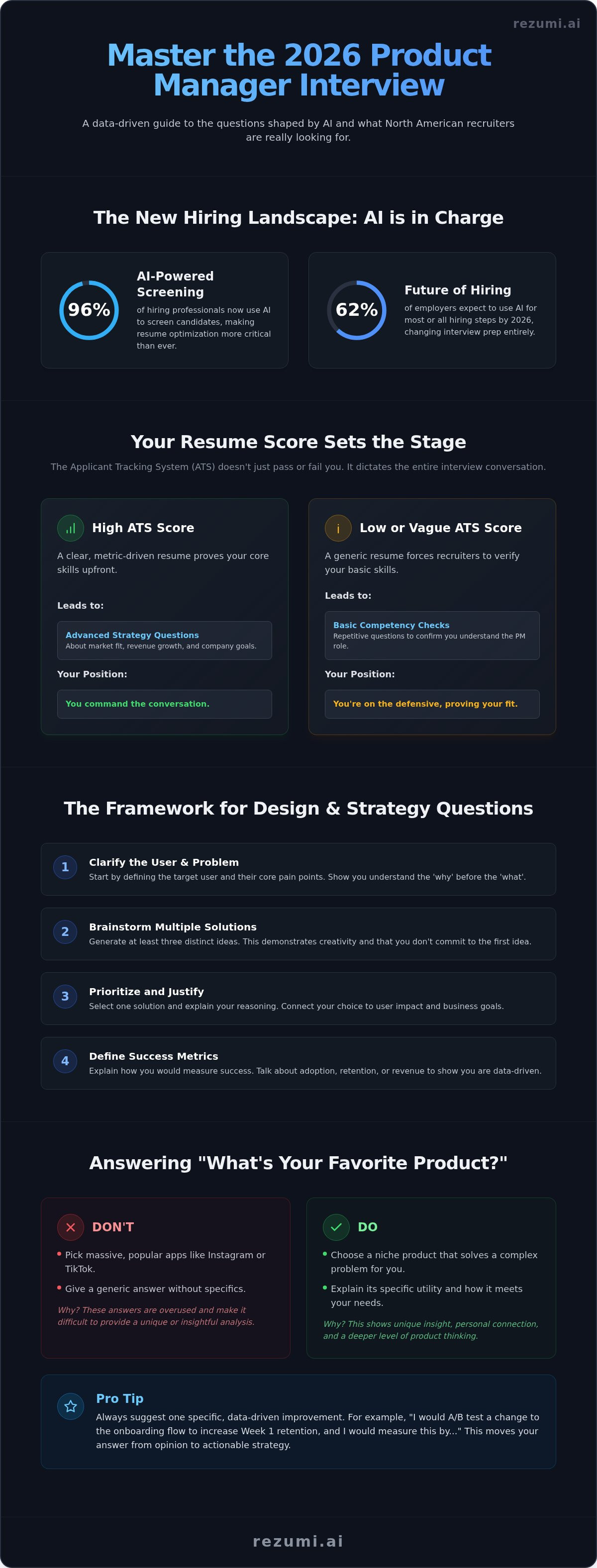
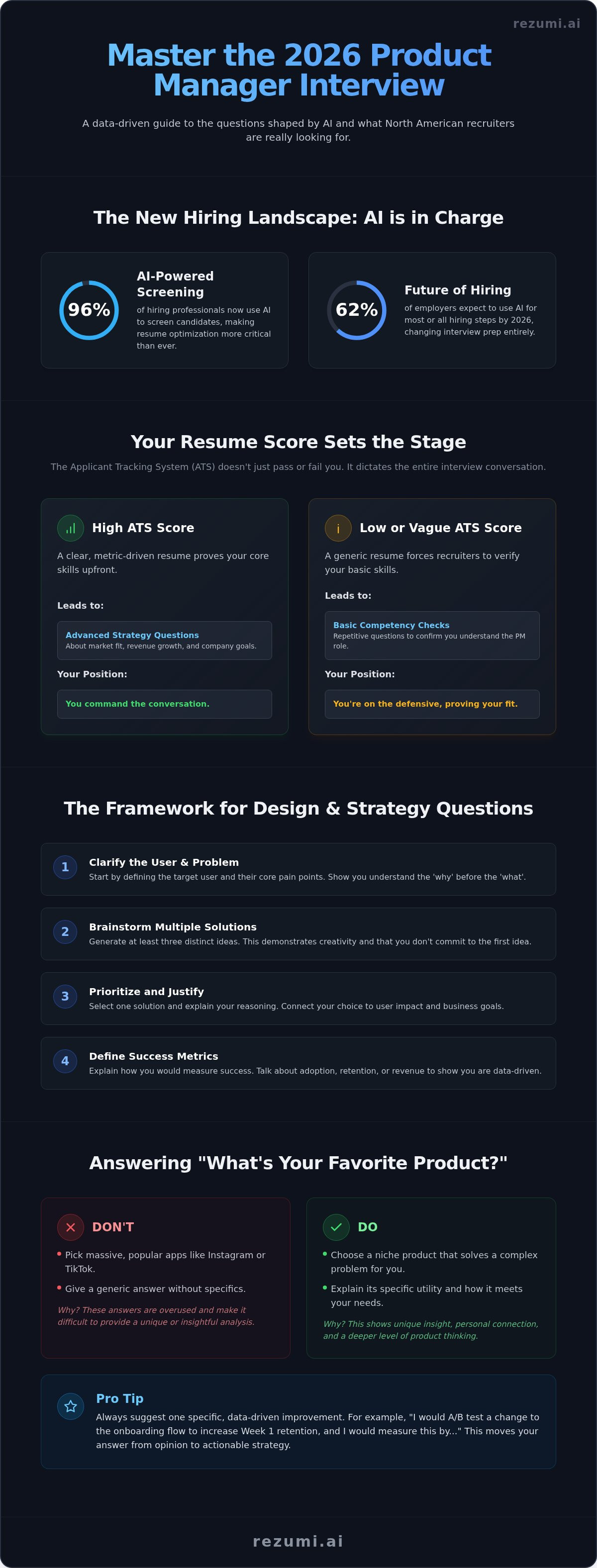
96% of hiring professionals in the United States now use AI to screen candidates during the recruitment process. This means your preparation must be more precise than ever. You likely feel the pressure of being caught off guard by questions about your biggest product failures. It is difficult to quantify your impact for an automated system while trying to prove you are a perfect cultural fit for a top tech firm.
We understand the high stakes of the modern job search. This guide ensures you master the most common product manager behavioral interview questions with frameworks designed for the 2026 market. You will gain the confidence to lead the conversation instead of just reacting to it. Our strategy replaces uncertainty with a data-backed approach that works for both human recruiters and automated systems.
We provide a clear list of likely questions for the US and Canadian markets. You will learn to use AI-driven prep to refine your answers and meet the new industry standards for AI literacy. We also break down how to connect your product decisions directly to business metrics to satisfy even the most data-driven recruiters.
Key Takeaways
- Your interview path starts with your resume score. Learn how recruiters use ATS data to find your strengths and gaps before the first call.
- Master the top product manager behavioral interview questions by focusing on your personal ownership and clear business results.
- Connect user empathy to strategy using frameworks that align your design choices with company goals.
- Practice estimation and execution problems to show you can handle prioritization and rough data sets with ease.
- Use AI interview prep to get instant feedback on your pacing and stop worrying about difficult failure-based questions.
The ATS Connection: How Your Resume Score Shapes Your Interview
Your interview trajectory begins long before the first video call. It starts with your resume score in the Applicant Tracking System (ATS). Most candidates think the ATS is just a gatekeeper. It's actually a data provider for the recruiter. 62% of employers expect to use AI for most or all hiring steps by 2026. These tools flag your specific strengths and gaps before a human ever reads your name.
The data from your resume dictates the difficulty of your product manager behavioral interview questions. A high-scoring resume proves you have the core skills. This leads the recruiter to ask advanced strategy questions about market fit and revenue growth. A low or vague score forces the recruiter to spend time on basic competency checks. They have to verify you actually understand the Product manager role before they can trust your strategic judgment.
Why ATS Optimization Sets the Stage
The keywords you include in your resume often become the recruiter's primary talking points. If you list "A/B testing" or "SQL data analysis," expect product manager behavioral interview questions about how you used those tools to solve a problem. A tailored resume shows you understand the specific needs of the company. It moves you past the "can you do the job" phase and into the "how well can you do it" phase. High-performing candidates use ATS Resume Optimization to ensure their best achievements are the ones that get flagged for discussion.
Resume Design and First Impressions
Recruiters in the North American market often spend less than ten seconds on an initial resume scan. A clean layout allows them to find your metrics and impact scores instantly. Standardized formats are essential because they prevent technical errors during the AI screening process. If the system cannot read your data, it cannot score you accurately. Following a proven Resume Format Guide ensures your document is both human-readable and machine-ready. This preparation reduces the friction in your application and sets a professional tone for the entire interview process.
- High ATS scores lead to high-level strategy discussions.
- Vague resumes result in repetitive competency testing.
- Keywords act as the foundation for your behavioral interview script.
Core Product Design and Strategy Questions
Design and strategy questions are where you prove you can think like a leader. These prompts aren't just about creative ideas. They measure your empathy for the user and your ability to meet business goals. You might face a prompt like "Design a new feature for a specific demographic" or "How would you improve your favorite product?" Both require a structured approach to avoid rambling.
While these technical cases are common, they often overlap with product manager behavioral interview questions. Recruiters want to see if your past actions align with your current design logic. They look for consistency between how you solved problems in your last role and how you solve them in the room today. They need to see that your design choices are rooted in a logical, repeatable process.
The Five Step Design Framework
Success in a design interview comes from a repeatable process. Don't jump straight to the solution. Start by identifying the user and their core pain points clearly. If you are designing for a senior citizen, their needs differ greatly from a college student. Once you define the user, brainstorm at least three different solutions. This shows you can think broadly before narrowing your focus.
After picking your best idea, define your success metrics immediately. A PM who doesn't talk about data is just a designer. Explain how you would measure adoption, retention, or revenue. This shows you are focused on tangible outcomes. If you want to practice these frameworks with real-time feedback, consider using AI interview prep to sharpen your delivery before the high-stakes meeting.
Answering Favorite Product Questions
The "favorite product" question is a trap for the unprepared. Don't pick a massive, popular app like Instagram or TikTok. These are overused and make it hard to stand out. Instead, choose a product that solves a specific, complex problem for you. It could be a niche productivity tool, a specialized financial app, or a local service platform.
Explain the specific utility the product provides. Then, suggest one data-driven improvement to show your mindset. For example, you might explain how a specific feature could reduce churn or increase the average order value. This transition from "user" to "product manager" is what secures the offer. It proves you don't just use products; you analyze them for growth and efficiency.
Behavioral Questions: Proving Impact in North America
North American recruiters use product manager behavioral interview questions to predict your future performance based on your past actions. They aren't looking for vague theories or hypothetical ideas. They want to hear about what you actually did. In the US and Canadian tech markets, hiring managers value directness and individual ownership. If you use "we" too often, you risk sounding like a passenger rather than the driver of the product. You must prove you can take a project from an idea to a measurable result.
These questions often focus on high-pressure moments. You might be asked to tell a story about a time you failed or how you handled a conflict with an engineer. These aren't traps. They are opportunities to show your resilience and your ability to use data to solve human problems. Preparation is the only way to ensure your stories are concise and impactful.
The STAR Method for Modern PMs
The STAR method is your best tool for staying on track during an interview. It prevents you from getting lost in the details of a complex project. North American recruiters have a low tolerance for rambling; they want the facts quickly so they can move to the next topic.
- Situation: Set the scene with specific context. Keep this to two sentences or less.
- Task: Describe the challenge you faced clearly. What was the hurdle you had to clear?
- Action: Explain exactly what you did. Use "I" statements to show your personal leadership. This should be the longest part of your answer.
- Result: Share the outcome with real numbers. If you don't have a number, you don't have a result in the eyes of a recruiter.
For example, don't just say you improved a feature. Say you increased the conversion rate by 12% over three months. This data-driven approach is exactly what top tech firms expect from their leaders. Practicing these stories alone is difficult. Our AI interview prep gives you a safe space to improve your delivery before you meet the hiring team. It helps you catch filler words and ensures your "Action" steps are strong enough to impress.
Handling Failure and Conflict
When a recruiter asks about a time you failed, they are testing your objective thinking. Don't pick a "fake" failure like being a perfectionist. Pick a real product mistake. Explain the data that showed the failure and describe the pivot you made. This shows you are outcome-oriented and able to learn from mistakes without letting your ego get in the way.
Conflict with engineers is another common theme in product manager behavioral interview questions. Avoid making the conflict personal. Show how you used user research or A/B test results to align the team. In the North American market, being a diplomatic PM who uses evidence to settle disputes is a major strength. Keep your explanation professional and avoid blaming others. This proves you can lead a team through friction without losing momentum.
Estimation and Execution: The Logic Behind the Numbers
Execution and estimation questions test how you prioritize tasks and think on your feet under pressure. While these feel different from standard product manager behavioral interview questions, they serve the same goal. They show the recruiter how you handle a crisis or a lack of data. You might be asked why a key metric dropped by 20% or how many smartphones are sold in New York annually. The recruiter isn't looking for a perfect number. They are looking for a perfect process.
In the North American market, technical fluency is a baseline requirement. 35% of new hires encountered AI at some point in their interview process in the second quarter of 2026. This means your logic must be structured and easy to follow. If you can't explain your reasoning clearly, you won't pass the screening. These questions prove you can connect product decisions to business metrics and revenue outcomes.
The Execution Logic Tree
When a recruiter tells you a metric has dropped, don't rush to a solution. Start by clarifying the metric and the exact timeline of the change. You need to know if the drop was a sudden crash or a slow decline over weeks. A sudden crash suggests a technical bug or a system outage. A slow decline might point to a seasonal trend or a new competitor in the market.
Next, segment the data to find the root cause. Break the numbers down by device, region, or user type. If the 20% drop only happens on Android devices in the US, you have narrowed your search significantly. Finally, identify external factors like holidays or major global events. This structured approach proves you can lead a team through a technical emergency without losing your cool. It shows you rely on evidence rather than guesswork.
Simplifying Estimation Questions
Estimation questions check your comfort with rough data sets. To succeed, always pick a round number for your starting population. If you are estimating sales in New York City, use 8 million or 10 million to make the mental math easier. You don't get extra points for using exact census data. You get points for showing your work clearly so the recruiter can follow your logic.
Always perform a sanity check on your final answer. If your math suggests that every person in New York buys five phones a month, your logic is flawed. Acknowledge the error and explain where you would adjust your assumptions. This level of self-awareness is a key trait of senior professionals. It proves you have the "product sense" to know when a data set doesn't pass the "smell test."
Command the Room with Rezumi AI Interview Prep
Rezumi's AI Interview Prep gives you a safe space to fail and improve. You don't want your first mistake to happen in front of a recruiter at a top tech firm. Practice is the only way to bridge the gap between a great resume and a signed offer. Our tool provides real-time feedback on your pacing and word choice to ensure you sound like a confident leader.
Most candidates practice with friends, but friends often lack objectivity. They might be supportive, but they aren't trained to spot gaps in your product logic. AI coaching removes this bias. It provides data-driven insights and simulates high-pressure scenarios for the North American market. This allows you to master product manager behavioral interview questions with total control.
How AI-Driven Coaching Works
The system is built for accuracy. You start by uploading your resume and the job description for the role you want. The AI analyzes both documents to find the most likely product manager behavioral interview questions you will face. It doesn't give you a generic list. It targets the specific strengths and gaps a recruiter will see in your profile.
During the session, the tool records your responses and tracks your delivery. You get immediate feedback on whether your "Action" steps are strong enough. You can also review AI-structured answers to see how to put numbers to your success. This cycle of practice turns your anxiety into a data-backed strategy.
Your Next Steps to Success
Success follows a clear path from your application to the final offer. First, check your application quality with our optimization tools. A high-scoring resume ensures you get invited to the interview. Once you have the meeting scheduled, focus entirely on your performance.
- Check your current application quality with our optimization tools.
- Practice your answers until they feel natural and confident.
- Review Pricing Plans for full access to coaching.
Use the AI feedback to refine your stories and remove filler words. When you are ready to take your prep to the next level, our coaching module provides the strategic advantage you need. This is the professional partner you need to secure a high-performance role.
Secure Your Product Manager Offer
Mastering product manager behavioral interview questions is about more than memorizing scripts. It requires a strategic alignment of your resume score, your design logic, and your data-driven stories. You now know how to use the STAR method to prove your impact and how to handle technical execution with a structured logic tree. These frameworks ensure you stay focused on business results rather than getting lost in project details.
Preparation is the only way to replace interview anxiety with a calm, data-backed strategy. Rezumi is built for the North American market to provide you with AI-driven feedback and ATS-optimized results. You can simulate high-pressure scenarios and refine your word choice until your delivery is natural and your logic is undeniable. You are ready to stop reacting to questions and start leading the conversation.
You have the expertise to lead a product team. Now you have the strategy to prove it to any recruiter. We are here to help you turn your next interview into a signed offer.
Frequently Asked Questions
What are the most common product manager behavioral interview questions?
The most common product manager behavioral interview questions focus on your ability to lead through ambiguity and resolve team conflicts. You should expect prompts like "Tell me about a time you failed" or "Describe a situation where you had to disagree with a stakeholder." Recruiters also frequently ask about how you prioritize a product roadmap when faced with limited resources. These questions test your resilience and your commitment to data-driven decision making in high-pressure environments.
How do I answer tell me about yourself in a PM interview?
Answer this question by focusing on your professional journey and your biggest wins. Start with your current role and a specific achievement that highlights your PM skills. Briefly explain your past experience and how it led you to specialize in product management. End by stating why you are excited about this specific company and how your background solves their current product challenges. Keep it under two minutes to maintain the recruiter's interest and momentum.
What is the hardest product manager interview question to answer?
Questions about failure are often the hardest because they require vulnerability and objective analysis. Recruiters want to see if you can take ownership of a mistake without blaming others or the market. Another difficult type is the high-level strategy question where you must defend a controversial product decision. The key to answering these is to show your logic and the data you used to pivot after the setback occurred. It proves you prioritize growth over ego.
How should I prepare for a technical PM interview in 2026?
Preparation in 2026 requires a deep understanding of AI workflows and model evaluation. You must be able to explain how you integrate AI into products to solve real user problems. Practice system design basics and ensure you can discuss API structures or data pipelines with engineers. Using AI-driven coaching tools can help you simulate these technical conversations and get real-time feedback on your accuracy. This ensures you sound like a technical partner rather than a bystander.
What questions should I ask my interviewer as a PM candidate?
Ask questions that show you are already thinking about the job's success metrics. You might ask, "How does the team define a successful product launch?" or "What is the biggest friction point between product and engineering right now?" These questions prove you care about the operational reality of the role. They also help you determine if the company culture aligns with your leadership style. Strategic questions show you are focused on long-term impact rather than just shipping features.
How do I use the STAR method for product management examples?
To use the STAR method for product manager behavioral interview questions, you must focus on your individual actions. Start with a brief situation and the specific challenge you faced. Spend the most time explaining the "Action" step using "I" statements to show your personal leadership. Conclude with a "Result" that includes concrete numbers. For example, mention how your specific feature update increased user retention by 15% within the first quarter. This proves your value.
How long should my behavioral interview answers be?
Your answers should typically last between two and three minutes. This is long enough to provide a detailed STAR response but short enough to keep the conversation moving. If you talk for too long, you risk losing the recruiter's attention or appearing unorganized. If your answer is too short, you might miss the chance to prove your impact. Practice with a timer to ensure your pacing is consistent and your points are concise and professional.
Is it okay to use notes during a remote PM interview?
Using limited notes is acceptable during remote interviews as long as you don't read from them directly. Use bullet points for high-level metrics or specific project names to keep your stories accurate. Keep your notes at eye level so you can maintain eye contact with the camera. If you spend the whole time looking down, you will lose the personal connection with the interviewer. Use notes as a safety net to ensure your data stays precise.
Disclaimer
This article is provided for general informational purposes only and does not constitute professional, legal, financial, or career advice. While Rezumi strives for accuracy, we make no warranties as to the completeness or reliability of this content. Hiring practices, ATS behavior, and job-market conditions vary by employer, industry, and region — always verify against your specific situation. Any action you take based on this article is at your own risk.