Interview Follow Up Email Template: Command the Post Interview Strategy
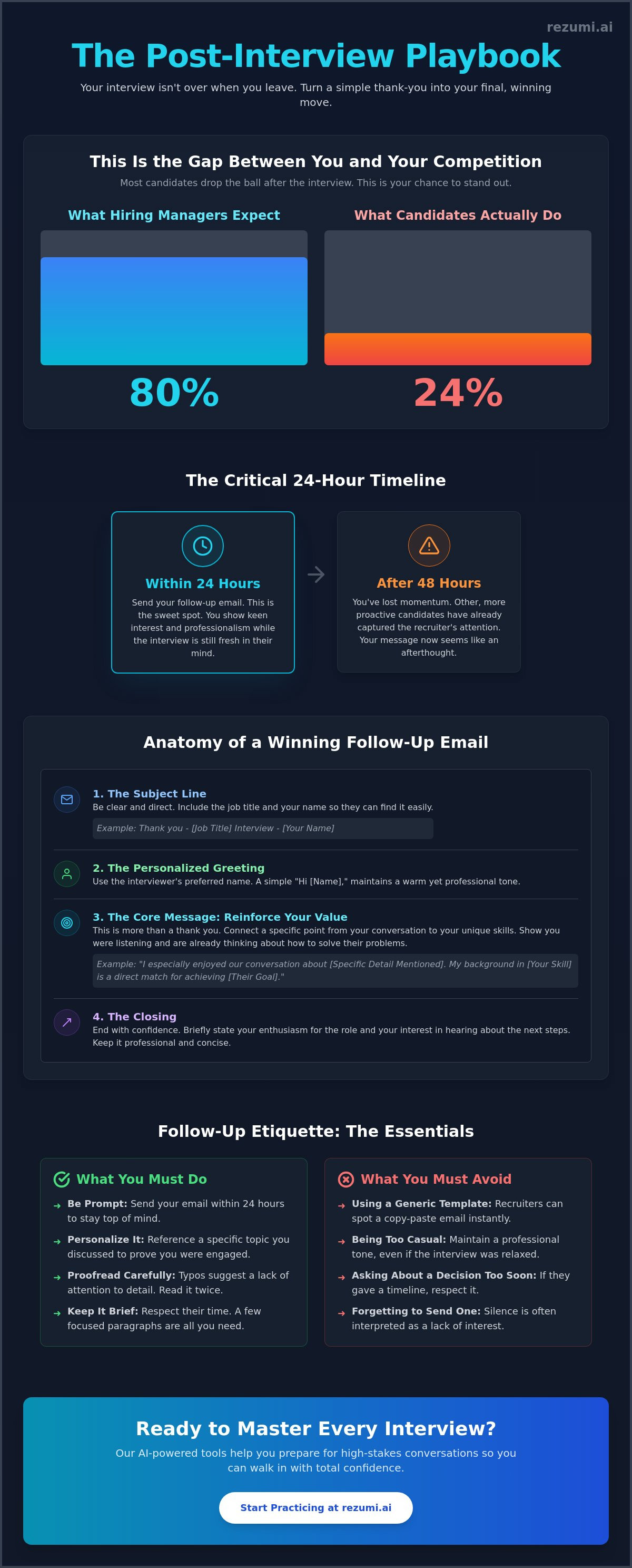
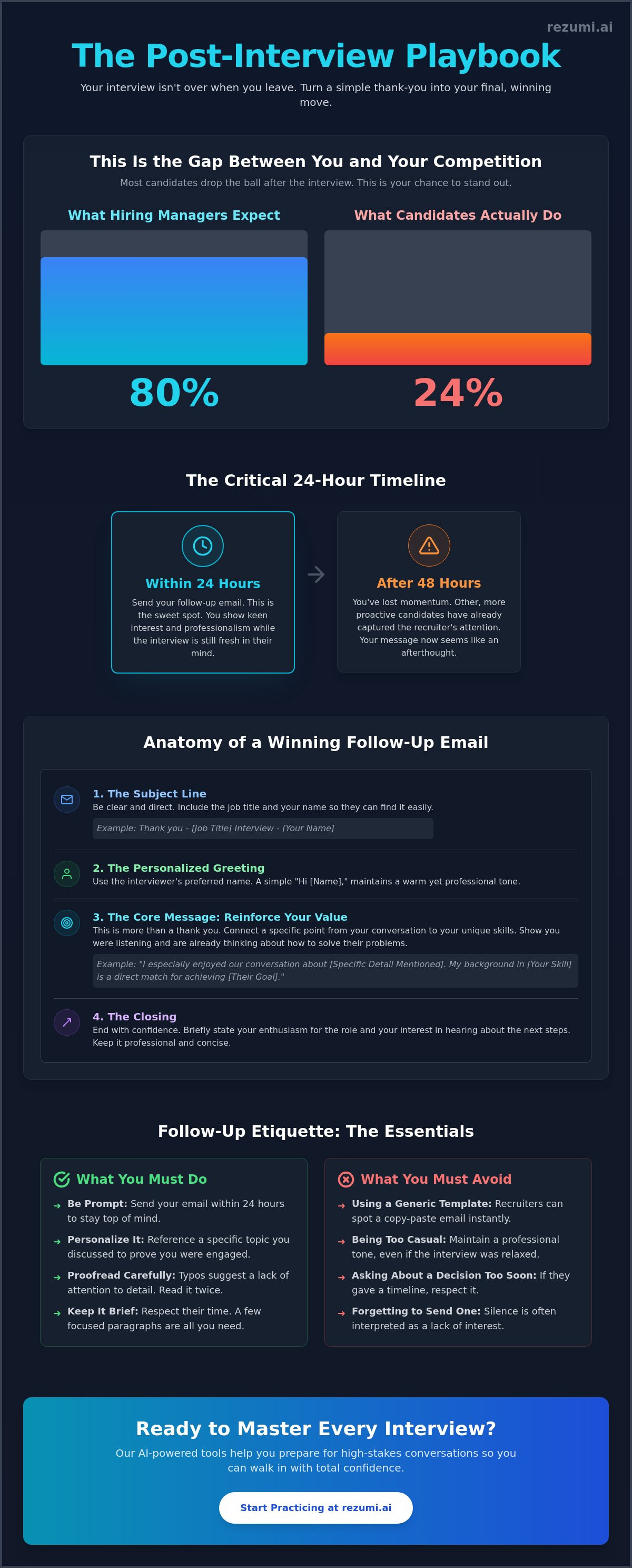
80% of hiring managers expect a thank-you note within 24 hours of your meeting, yet only 24% of candidates actually send one. This massive gap is your fastest path to the top of the pile. Your interview doesn't end when you leave the room. It ends when you secure the role. Sending a professional interview follow up email template is the final step in proving you are the right fit for the team.
It's normal to feel anxious about the silence that follows a great conversation. You don't want to seem desperate, but you can't risk being ghosted by a busy recruiter. We understand that articulating your value after the pressure of the interview is difficult. You need a strategy that keeps you on their radar without looking like you're trying too hard.
This article gives you the professional templates and strategic timeline you need to command the post-interview process in the North American market. You'll learn exactly when to hit send to reinforce your status as the top candidate. We'll show you how to turn a simple thank-you into a powerful tool that gets you a clear response regarding next steps.
Key Takeaways
- Send your follow up within 24 hours to meet North American recruiter expectations and stay top of mind.
- Select a proven interview follow up email template that balances brevity with a strong reinforcement of your specific skills.
- Learn the exact timing for a second check-in so you can stay on the recruiter's radar without being intrusive.
- Adopt the right etiquette by using the interviewer's preferred name and maintaining a professional yet warm tone.
- Build a stronger foundation for your next meeting by using AI Interview Prep to master high-stakes conversations.
The Strategic Impact of Your Interview Follow Up Email
Your interview performance doesn't end when you close the laptop or walk out the door. In the North American market, the follow up is a high-stakes extension of your candidacy. It's your final chance to influence the hiring decision before the committee meets. Think of it as a strategic reinforcement. While some see it as a simple courtesy, top-tier professionals use it to prove they understand the company's immediate needs.
Failing to send a note signals a lack of interest. It suggests you aren't proactive. Recruiters often interpret silence as a sign that you're pursuing other offers or simply don't care enough about the role. While the purpose of a thank-you letter is traditionally rooted in gratitude, its professional application is about alignment. By using a tailored interview follow up email template, you transform a polite gesture into a tactical advantage. You're not just being nice. You're being indispensable.
Why Timing is Critical in the 2026 Job Market
Speed is a metric of your professionalism. You should aim to send your first note within 12 to 24 hours of the meeting. In 2026, hiring cycles move fast. Automation often handles the initial screening, but human decision-makers still value the personal touch of a prompt response. Early responses demonstrate your organizational skills and genuine enthusiasm. If you wait 48 hours or longer, you've already lost momentum. Another candidate has likely captured the recruiter's attention by then. Be the first person they think of when they start their morning review. Promptness shows you're ready to work.
Connecting Your Follow Up to Interview Performance
Generic "thank you for your time" emails get ignored. To stand out, you must connect your message to the specific conversation you just had. Reference a particular problem or "pain point" the manager mentioned. Maybe they're struggling with a software migration or a gap in team leadership. Briefly restate how your skills provide a direct solution to that exact issue. This proves you were listening and that you're already thinking about the company's success.
This email also provides a safety net. If you realized after the call that you missed a key detail, use this space to provide that context. It shows you're reflective and thorough. You aren't just sending a generic interview follow up email template; you're continuing a high-level business conversation. This level of detail confirms that you weren't just listening. You were already solving their problems in your head. It transforms you from a candidate into a partner who is already contributing value.
Proven Interview Follow Up Email Templates for 2026
Short and direct templates are the gold standard for high-stakes industries like tech and finance. Hiring managers receive hundreds of emails every day. They don't have time for fluff. Your goal is to choose an interview follow up email template that is memorable but brief. If you sound like an automated bot, you lose credibility. Every interview follow up email template you use must be customized with a specific detail from your conversation. This shows you were present and engaged. Focus on the value you bring to the team rather than just repeating your gratitude. Clear and professional subject lines are also essential so the recruiter can file your message easily.
The Standard Post Interview Thank You Template
This version is best for initial rounds or screening calls where you need to maintain momentum. It includes a placeholder for a specific detail to prove you were paying attention. It ends with a clear but soft call to action regarding next steps.
Subject: Thank you - [Job Title] Interview - [Your Name]
Hi [Interviewer Name],
Thank you for the chance to discuss the [Job Title] role today. I especially enjoyed our conversation about [Specific Detail Mentioned]. Based on our talk, I am confident my background in [Skill] will help your team achieve [Goal]. I look forward to hearing about the next steps.
Best, [Your Name]
The Value Add Template for Final Rounds
Use this after a deep dive with a department head. Understanding How to Write a Follow-Up Email that goes beyond a simple thank-you is what separates finalists from also-rans. Attach a relevant portfolio piece or a brief strategy idea to show your "Day 1" impact.
Subject: Follow up / Strategic thoughts - [Your Name]
Hi [Interviewer Name],
I enjoyed our deep dive into the [Department] strategy today. Since our meeting, I have been thinking about your goal to [Specific Goal]. I've attached a brief [Portfolio Piece or Idea] that shows how I would approach this on my first day. I am eager to help the team succeed.
Best, [Your Name]
The Quick Phone Screen Follow Up
Keep the energy high after a brief recruiter call. This note reiterates your excitement and confirms your availability for upcoming technical rounds. To keep your entire job search this organized, you can view our current plans and start optimizing every step of your journey.
Subject: Next steps - [Job Title] - [Your Name]
Hi [Recruiter Name],
Thanks for the call earlier. I am excited about the [Job Title] position and the [Company Name] mission. As we discussed, I am available for technical rounds on [Day/Time]. Looking forward to it.
Best, [Your Name]
When to Send a Second Follow Up After No Response
Recruiters are human. They get sick, go on vacation, or simply get buried under a mountain of applications. If you haven't heard back after your initial thank-you note, don't panic. Silence is rarely an immediate rejection. Instead, view it as a signal to re-engage with a shorter, more focused interview follow up email template. It is a tool for maintaining your momentum when the hiring process slows down.
Modern hiring involves many moving parts. As of May 2026, 27% of HR professionals report that their organization uses AI in the recruiting process. This technology often handles the initial screening, but human decision-makers still drive the final selection. A second follow up ensures you don't get lost in the digital shuffle. It keeps you relevant without being intrusive. You are reminding them that you are ready and available for the next step.
The 5 Day Rule for Modern Hiring
Wait five business days before you send your second message. This gives the team enough time to finish other interviews and sync internally. If the recruiter gave you a specific timeline, like "you'll hear from us by Friday," wait until that deadline has passed by at least 24 hours. Pushing too early can make you seem impatient. Respecting their timeline shows you are professional and easy to work with.
Your second check-in should be brief. Its primary goal is to confirm the hiring team has everything they need from you. You aren't asking for a decision yet. You're simply offering to provide more information if it helps their process. This approach helps you follow up without looking desperate while keeping the conversation alive. It positions you as a helpful partner rather than a nuisance.
Crafting the 'Checking In' Message
Tone is everything in a second follow up. Avoid sounding frustrated or demanding. You want to come across as a professional who is managing their own career effectively. Reiterate your interest in the role and the team, but keep it punchy. A three-sentence email is often more effective than a long paragraph during this stage. Use this space to provide a fresh update if you have one, such as a new certification or a completed project.
If you have other offers pending, mention them politely. This creates professional urgency without being aggressive. It tells the recruiter that you are a high-value candidate who is in demand. To stay ahead of these high-stakes moments, you can explore our strategic career tools to ensure your next move is calculated and confident. A well-timed update can often be the nudge a manager needs to make a final offer. You are showing them that you are a candidate worth securing quickly.
Essential Etiquette for North American Hiring Managers
Professionalism in the United States and Canada requires a specific balance of warmth and directness. You need to sound like a future colleague, not a fan. North American hiring managers value efficiency and clarity above all else. According to research from November 2025, 80% of hiring managers report that they value thoughtful follow-up communications. However, they don't want to read a novel. When you select an interview follow up email template, ensure the tone reflects a strategic partner. This means being polite without being overly formal or stiff.
Address your contact by the preferred name they used during the interview. If they introduced themselves as "Sarah," don't use "Ms. Smith" in your email. Using a formal title when they've invited a first-name basis can create an awkward distance. At the same time, avoid using slang or overly casual language. Even in "laid back" tech environments, your written follow-up should remain polished. Ensure your email signature is clean and professional. It must include your phone number and a link to your LinkedIn profile. This makes it easy for the recruiter to verify your background one last time before making a decision.
Formatting for Clarity and Speed
Recruiters are often on the move. They check emails on mobile devices between meetings. To respect their time, use short paragraphs of two to three sentences. Large blocks of text are difficult to scan and often get ignored. Check for perfect grammar to prove your attention to detail. A single typo in a follow-up can suggest that you're careless with your work. Since 68% of hiring managers state that a thank-you note positively influences their hiring decision (June 2026), you cannot afford to skip the proofreading stage. To ensure your communication matches the quality of your application, you can choose a professional plan that supports your career growth.
Common Mistakes That Kill Your Chances
The most common error is sending a generic "cut and paste" message to multiple interviewers at the same company. If you met with three people, send three different notes. Mention something unique you discussed with each person. This proves you were engaged and value their individual input. Another mistake is asking for feedback too aggressively in the first follow up. Give them space to process the interview first. Finally, always double-check the company name. Forgetting to update the company name in your interview follow up email template is a fatal mistake that signals a lack of genuine interest in the role.
Streamlining Your Career Strategy with Rezumi AI
A successful follow up starts long before you open your inbox. It begins during the preparation phase. If your interview performance is shaky, even the most polished interview follow up email template cannot save your candidacy. You need to enter the room with a data-backed strategy that aligns your skills with the company's specific needs. This preparation creates the memorable moments you will later reference in your thank-you note.
Rezumi AI provides the tools you need to command every stage of the process. You can use our platform to ensure your follow up matches the specific keywords found in your optimized resume. This consistency reinforces your brand as a top-tier professional. By using a strategic approach, you replace the anxiety of the job search with the calm confidence of a prepared expert. You aren't just hoping for a call back. You are providing a logical reason for them to hire you.
Mastering the Conversation Before You Send the Email
The quality of your follow up depends on the quality of the interview. You must give the hiring manager something worth remembering. Identify key talking points that will make your message more impactful. Focus on the specific problems the manager needs to solve. When you provide clear solutions during the call, your follow up becomes a simple confirmation of your value.
- Refine your responses with our AI Interview Prep tool. This tool helps you practice high-stakes questions in a low-pressure environment.
- Practice the STAR technique to ensure you have memorable stories to reference. This method (Situation, Task, Action, Result) helps you deliver concise and data-driven answers.
- Use these structured stories as the foundation for your interview follow up email template. Referencing a specific "Result" from your interview shows you are focused on tangible outcomes.
Securing the Offer with Professional Precision
A great follow up is a direct result of a great interview performance. When you perform well, you create a natural opening for a second conversation. You should track all your applications and follow ups in one central workspace. This organization ensures you never miss a deadline or forget which version of your resume a recruiter has on file. Precision is what separates senior professionals from the rest of the pack.
Command the room and the inbox with a data-backed approach. You can review our pricing plans to access premium interview modules that guide you through every step of the hiring cycle. Being prepared is the only way to stay on the recruiter's radar in a competitive market. Don't leave your next role to chance. Use the right tools to secure your future with confidence.
Secure Your Future with Strategic Follow Ups
You now have the tools to turn a standard thank-you into a strategic win. Timing is your greatest asset in the North American market. Sending your note within 24 hours keeps you at the top of the recruiter's mind while others are still drafting their replies. By selecting the right interview follow up email template, you reinforce your specific value and prove you're already thinking about the team's success. This approach transforms you from a simple applicant into a proactive partner who is ready to deliver results on day one.
A successful follow up is built on the foundation of a high-performance interview. Rezumi is here to ensure every part of your search is optimized for concrete outcomes. Our platform offers an ATS-optimized resume builder and AI-driven interview coaching specifically designed for the North American market. You can stop guessing and start executing a data-backed career strategy that respects your time and your goals. You have the skills and the strategy. Now, it's time to take control of your professional path.
Command your next interview with Rezumi AI. You've done the hard work of landing the meeting. Now, it's time to close the deal and secure your next role with total confidence.
Frequently Asked Questions
How long should I wait to send a follow up email after an interview?
You should send your follow up note within 12 to 24 hours of the meeting. This timeframe meets the expectations of 80% of North American hiring managers who want to see a thank-you message within one day. Promptness proves your organizational skills and ensures you stay top of mind as they begin their evaluation process.
What should the subject line of an interview follow up email be?
Keep your subject line clear, professional, and easy to file. A strong example is "Thank you - [Job Title] Interview - [Your Name]". Including the specific role and your full name helps busy recruiters identify your candidacy immediately without needing to search through their records for context.
Should I send a follow up email if I think the interview went poorly?
Yes, you should always send a follow up regardless of how the meeting felt. You can use this space to briefly clarify a technical point you missed or to provide additional context for a difficult question. Professionalism and resilience are valuable traits that can sometimes turn a poor performance into a second chance.
Is it okay to follow up with the recruiter on LinkedIn instead of email?
Email is the standard and preferred channel for official hiring communication in the US and Canada. While you can send a connection request on LinkedIn, don't use it for your primary thank-you note. Stick to the email address provided during the process to ensure your message is archived in the correct hiring file.
What do I do if I still get no response after two follow up emails?
Stop reaching out and focus your energy on other applications if you haven't heard back after two follow ups. Continuing to send messages can appear intrusive or desperate. If the company eventually moves forward, they will contact you; in the meantime, keep your momentum high by pursuing new opportunities.
Should I send a separate follow up email to every person who interviewed me?
Yes, you must send a unique, tailored note to every individual on the interview panel. Mention a specific detail you discussed with each person to show you were fully engaged. Using a generic interview follow up email template for every person is a mistake that suggests you aren't truly invested in the team.
Can I use AI to write my interview follow up email?
You can use AI to build a strong draft, but you must customize the final version yourself. Recruiters are trained to spot generic, automated text that lacks personal touch. Use AI to refine your structure and grammar, then add specific details from your conversation to ensure the message feels authentic and human.
How do I mention that I have another job offer in my follow up?
State the situation politely to create professional urgency without sounding demanding. You can mention that while you've received another offer, this position remains your top priority. This informs the recruiter that you are a high-value candidate and encourages them to speed up their internal decision-making process.
Disclaimer
This article is provided for general informational purposes only and does not constitute professional, legal, financial, or career advice. While Rezumi strives for accuracy, we make no warranties as to the completeness or reliability of this content. Hiring practices, ATS behavior, and job-market conditions vary by employer, industry, and region — always verify against your specific situation. Any action you take based on this article is at your own risk.